Greyhound
by Joanna Pocock
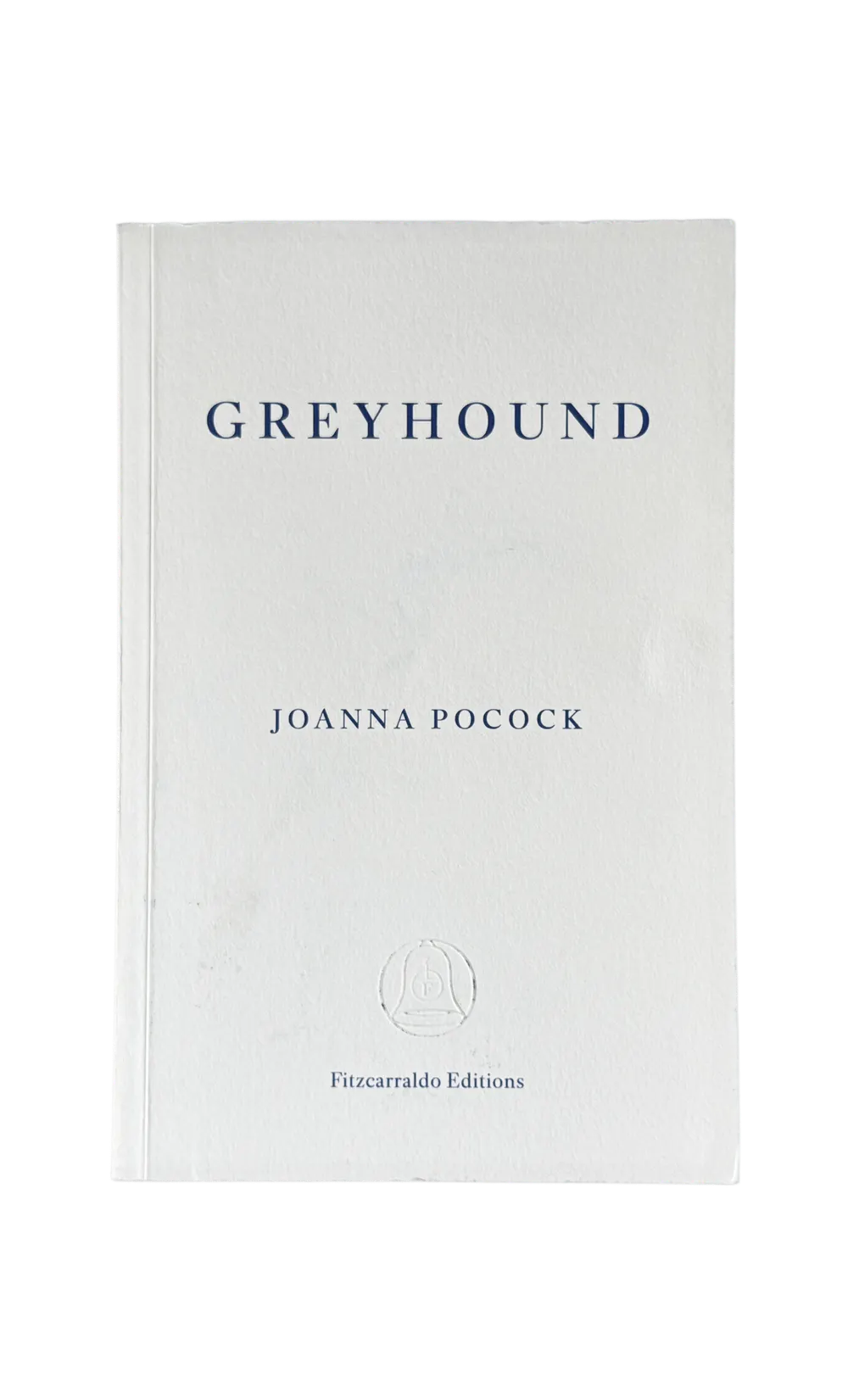
Joanna Pocock retraces a Greyhound journey across America
I was on an airplane making its way to America when I started reading Joanna Pocock’s Greyhound. I read it during my stay in Louisville (Kentucky), and I finished it at a Chicago airport on my way back home. I thought it fitting to read it while traveling, as it details her journey across America on a Greyhound bus. Ideally, I would have read it while moving continuously myself, lines painted on a highway blurring beneath my wheels, on a roadtrip to an elsewhere. It doesn’t always work out that way; I do recommend you read it while on the move.
We follow Pocock going from Detroit to Los Angeles. She made the same journey before, in 2006, in the wake of her third miscarriage and the passing of her sister. This second time around, in 2023, her crossing the country is a way of checking in with the land, and with herself. She crosses the same highways she did then, takes in the cities and, as much as that’s possible, sleeps in the motels she visited previously, documenting how everything has changed—in her notebook and with her camera. How she has changed, and how America has changed, too—not for the better.
She doesn’t have a driver’s license, so traversing the country by bus isn’t entirely by choice. She relies on public transportation and the occasional Uber, mostly when the Greyhound station she disembarks at is located in a godawful and forgotten corner of a city. Her car-less existence means she can’t control her journey like someone else would, and she pits her experience against the literature written by men behind the wheel, like Steinbeck and Kerouac. Hers is the wilder ride.
It becomes clear that America has long forgotten about its public transportation, as she documents missing timetables, bus stops situated in dangerous locations, and near-abandoned stations without any amenities or facilities whatsoever. Long waits in unshaded areas, heat rippling off the boiling tarmac. Frequently, there are no ticket machines (losing your phone means you lose your ticket); often, there is a near-absence of sympathy.
Her book tells the story of a fading communal experience, of travel as an act of isolation. Back when she took her previous journey across the country she’d meet her fellow travelers more easily. Have conversations, get to know them. This time around, most everyone is absorbed by their phone (and, to be fair, severing oneself seems like the right thing to do when the conditions of travel are so poor). Trash bags filled with clothing regularly outnumber suitcases; the Greyhound comes across as a last resort for many.
Pocock writes:
“There are only three accounts of women undertaking The Great American Road Trip that I know of: Simone de Beauvoir’s 1948 America Day by Day (beautifully translated by Carol Cosman), British writer Ethel Mannin’s travelogue An American Journey, written some twenty years later and The Great American Bus Ride by Irma Kurtz, which was published in 1993.”
She traces the footsteps of women who traveled before her, though it becomes clear that Simone de Beauvoir’s experience was markedly different: it was new, and seemingly free of worry (though she has her complaints, too). Pocock’s travels, I can’t say otherwise, seem mostly chaotic, sometimes unbelievably so.
Here’s a particularly chaotic scene, featuring one of a few of the erratic drives (and drivers) she encountered:
“‘I wasn’t supposed to do this route,’ the driver repeated as she turned the bus around and headed back to where we had come from. The Marine behind me was still swearing at the Greyhound customer service people: ‘She’s just done a U-turn on the highway!’ A woman across the aisle from me one row ahead was watching videos of a baby crying. She had the sound on. Was this her baby? Someone else’s baby? Was it being looked after by relatives? Friends? Between bouts of crying there was the sound of shattering glass. Maybe it was some kind of game. Someone else was watching a violent film with the sound up. Gunfire rang out from his iPad. Crying, glass shattering, automatic weapons. We drove on. The sign language guy was keeping us informed about what he was telling the deaf woman. We approved of his running commentary.”
Reading this scene, like so many in the book, made me want to curl up in the comfort of my home. It also made me want to take a Greyhound bus across America.
Pocock creates an impressive tapestry, combining memoir, reporting, and deeply researched environmental writing. She sharply observes the characters around her, the conversations she overhears, and the landscapes passing her window—writing devastatingly about the concrete but lovingly about the land. In Amarillo “the earth would be turning ochre and red, the light would travel for miles”. Or in Abiquiu, a two-and-a-half-hour drive from Albuquerque:
“I had never seen such a place. Such light. Such red earth. What Willa Cather describes as ‘a sweep of red carnelian-coloured hills’. Where these reds met the blue on the horizon was a shimmering line, an almost imperceptible now-you-see-me-now-you-don’t ribbon of violet, almost white. The magnetic pull of this land was powerful. What writer or artist with the means would not want to move here forever?”
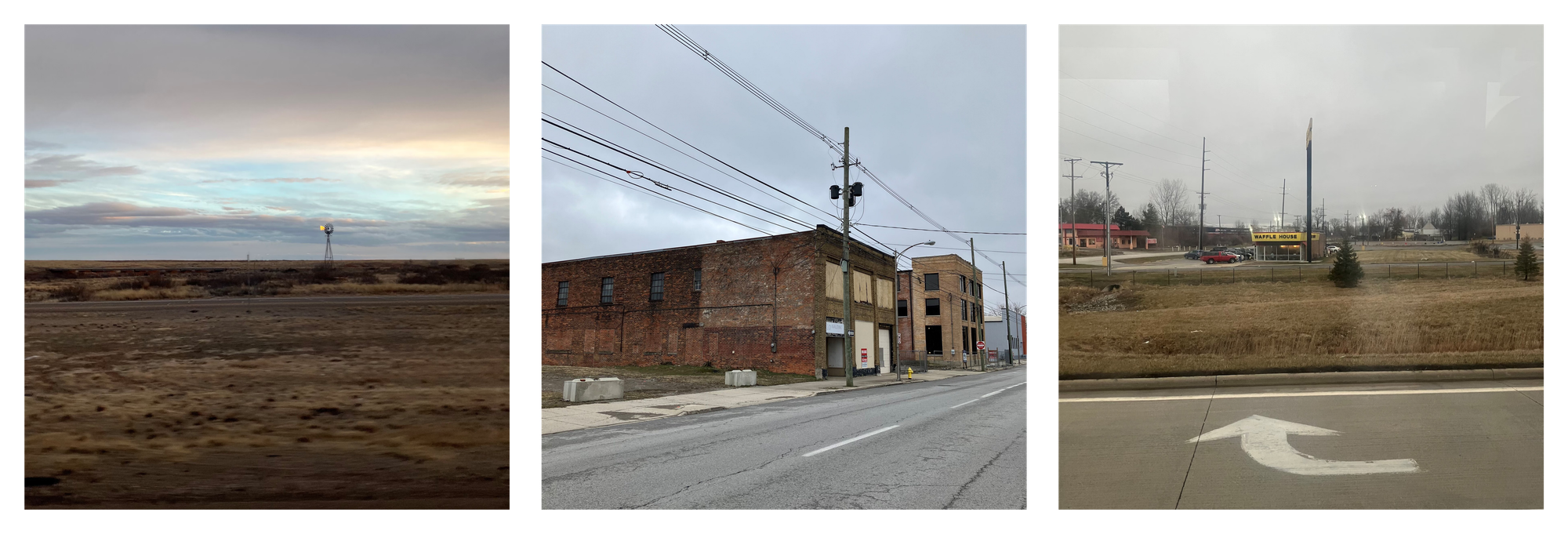
Photographs taken by Pocock accompany her writing. Printed in black-and-white, they strip away the ochre and the violet. Still, America shines through in full colour.
Greyhound by Joanna Pocock
Published by Fitzcarraldo Editions in 2025
Read an excerpt on Orion Magazine