The Silver Book
by Olivia Laing
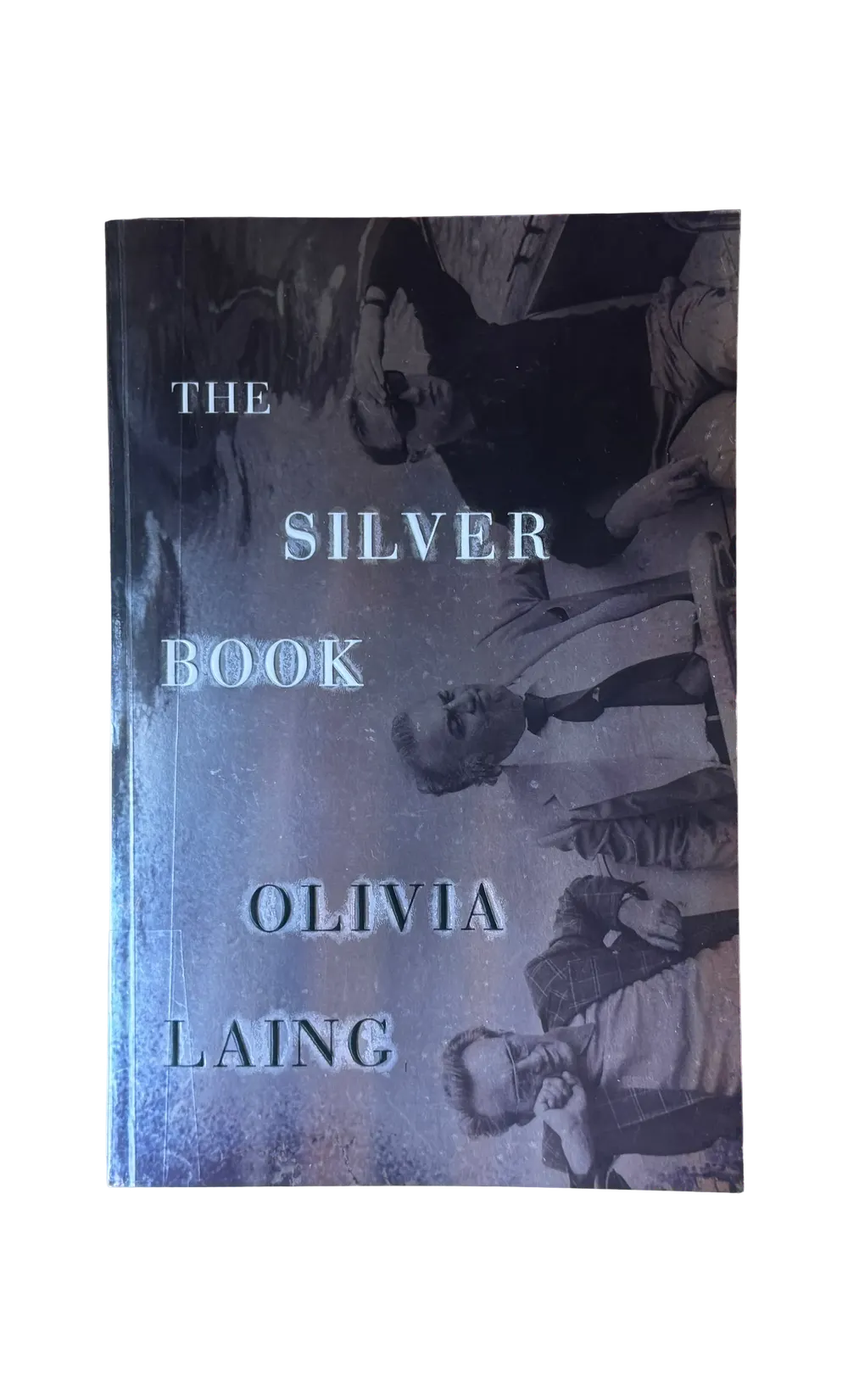
Olivia Laing’s second novel apprentices an English boy to a magician of Italian cinema, in the months leading up to the events of November 1975.
A young artist from London is plucked out of Venice by Danilo Donati, the set and costume designer who works with film directors Federico Fellini and Pier Paolo Pasolini. Donati takes him to Rome, first as his lover, then makes him his apprentice, working from Cinecittà, the film studios, on Fellini’s Casanova starring Donald Sutherland; then to a farmhouse in the north, for Pasolini’s Salò, a gruesome fascist hellscape.
“It is Danilo’s snoring that wakes Nicholas in the night, heart pounding, one unfamiliar leg flung over his. Sex he wanted, sex has never made him feel bad, but he has traded away his name. He said Nicholas before any alternative presented itself. Now he has tied his face to his identity when he could have taken the opportunity to throw it away, to reinvent. Nicholas Wade, art student.”
Nicholas arrives in Italy by ferry, distressed, escaping a death, and is plunged into a world of beauty, albeit artificial. He meanders through Rome in spring and summer, and Laing’s writing is sticky like the city is—makes you wish you were there, strolling through the heat, Wayfarers on, pack of cigarettes tucked in the pocket of a linen shirt.
The others on set call him mozzo. “Cabin boy, gopher. Bottom of the heap, sure, but part of the team.” He draws, paints, and makes what he is asked to make, learning to fake snow from feathers, rolled oats, tissue paper, Parmesan cheese.
“If he’s lucky, if he’s quiet, he will be able to watch Danilo at work. It is fascinating to Nicholas, the way he converts the real city they are travelling through into scenes from a story. Even without people, his rooms are thick with narrative potential. It’s the frame, Dani says. The frame and the direction of the light. He makes a garden tucked beside a church, furnishes it with cypresses and a well, gives it a moon, scratches pale blue ripples of light into the trees. You can feel the presence of the water beyond the steps, an invisible mirror.”
The book’s perspective shifts seamlessly between that of Danilo and that of Nicholas, helped by its fragmentary composition. Laing dips in and out of their inner worlds, keeps sentences short, and propels the reader forward. I was most enamoured of the scenes in which the two of them travel, taking note of and drawing the city, or a detail in an abandoned building. Or their hands at work within the confines of those film sets—the lucidity with which Laing writes sometimes reminding me of Claire Wilcox’s Patch Work, a memoir by the V&A’s curator of fashion.
“There is no music, just the clack-clack of sewing machines, the sound of the big dog breathing. He is in it like a dancer, off the book, note-perfect. Everything is at a finger’s reach. It’s like he exhales dresses, a chorus line of red and blue and pink, stretching as far as the eye can see.”
Laing writes a slim, fictional narrative over a rich, real-world history previously written about in large biographies. At 239 pages, a lot of that history is inferred rather than explored. The characters, the textures—the world they inhabit and the worlds they construct—move to the front of the frame, and Laing describes them impressively, in short, delicate strokes. As a whole, it feels unforced. Light, and funny, too (“Why are Italians so obsessed with tiny cars? Because we like to look impressive climbing out of them, Dani says”).
But it’s not all sweaty, sticky, and sensual. Nicholas gets mixed up in a noir plot of film canisters, blackmail, and Pasolini, Laing building on a theory of what happened that November. On paper, a thriller, though I think it never quite reads like one. The tension stays diffuse, the plot waiting patiently while Laing looks at a doorway, a dress, the light. Really, it’s where the book is best.
Read it before the summer’s heat fades.
My thanks to Scott, a reader from Louisville, who recommended I read this book.
The Silver Book by Olivia Laing
Published by Hamish Hamilton in 2025